For many public safety and healthcare organizations, scheduling has long been a patchwork of spreadsheets, whiteboards, texts, sticky notes, and a whole lot of memory. And to be fair — it worked. Until it didn’t.
As agencies scale, responsibilities expand, and staffing demands evolve, manual scheduling becomes a daily maze of shift swaps, call-outs, overtime approvals, and updates that never reach everyone in time. The good news? Transitioning from manual to digital scheduling doesn’t have to be overwhelming. When done right, it can be one of the most impactful gains for your operations, your team’s morale, and your organization’s long-term efficiency.
1. Start With the “Why” — And Make It Clear Across Your Team
A transition is always easier when everyone understands the purpose behind it.
For EMS crews, digital scheduling means fewer “Who’s actually on?” moments right before a shift change. Fire departments benefit from simplified rotations, bid cycles, and better rule enforcement. Police departments gain streamlined overtime requests and reduced communication gaps. Dispatch centers experience real-time visibility across consoles and coverage needs, while healthcare and government teams enjoy clarity, compliance, and fewer errors.
Make the “why” clear to your full team: you’re not just replacing a process that worked — you’re upgrading it so that everyone can focus more on serving the community and less on chasing down updates.
You can explore more about how digital scheduling supports teams in different industries on the eSchedule Scheduling page.
2. Map Out Your Current Process (Yes, Even the Messy Parts)
Before implementing a scheduling platform, take time to outline your current workflow — not the ideal version, but how it actually operates. Consider questions like: Who enters the schedule, and how? How are changes approved? How do call-outs get handled? Who communicates updates, and what recurring rules cause the most confusion?
Real-world insights like these ensure that your digital tool reflects actual operations, rather than an idealized version. Many organizations find that this exercise alone reveals duplicated tasks, wasted steps, or manual processes that could have been automated years ago.
3. Choose Software That Matches Your Industry — Not Just Any Industry
Scheduling for public safety and healthcare is fundamentally different from scheduling for retail or hospitality. Agencies need to manage certifications and expirations, complex rotations, mandatory staffing requirements, overtime tracking, training, court appearances, special assignments, and 24/7 coverage with no room for error.
A generic scheduling tool often falls short. Instead, invest in a purpose-built solution designed for EMS, fire, police, dispatch, healthcare, and government agencies. It should support your unique needs out of the box, rather than forcing you to work around its limitations.
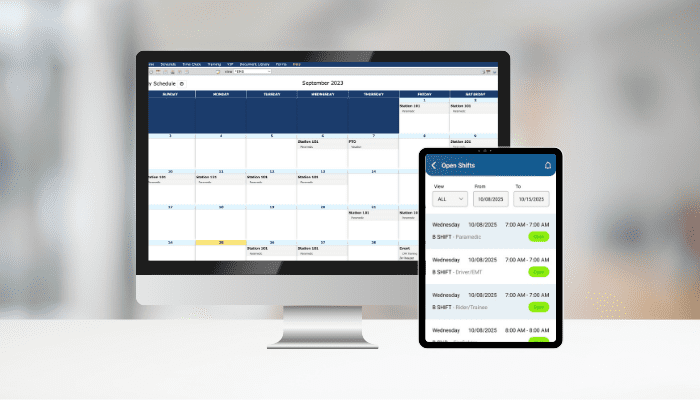
For example, eSchedule offers built-in tools for credential tracking, automated scheduling rules, and real-time notifications tailored to these industries. The platform adapts to each agency’s requirements, making day-to-day scheduling faster, more accurate, and less stressful.
4. Start Small: Pilot First, Expand After
Rolling out a digital scheduling system across an entire organization all at once rarely works well. A phased approach is safer, smoother, and far more effective. Start with a small unit, station, or team to test the platform. Collect feedback on what’s working and what isn’t. Make adjustments to templates, rules, or permissions based on real-world use, then gradually expand to the rest of the organization.
This method reduces risk and builds internal champions — team members who can confidently say, “It’s actually better than what we had.” A step-by-step rollout gives your team time to adapt, learn, and fully embrace the new system without feeling overwhelmed.
5. Train Your Team With Practical, Hands-On Learning
Training can make or break adoption. Overloading staff with every feature at once creates frustration, while practical, role-specific instruction builds confidence.
EMS teams benefit from learning how to submit availability, swap shifts, and acknowledge updates efficiently. Fire departments need clear instructions for viewing rotations, tracking overtime, and managing station assignments. Police personnel should focus on signing up for extra duty and managing court schedules. Dispatchers gain value from verifying console coverage and monitoring updates, and healthcare staff benefit from tracking shift assignments and cross-unit coverage.
Training works best when it’s a blend of live sessions, short video walkthroughs, and step-by-step guides. Designating “super users” — local experts who support others — also strengthens adoption and keeps the rollout moving smoothly.
6. Automate What Makes Sense — But Keep Control Where It Matters
Automation is one of the most significant advantages of digital scheduling, but it doesn’t replace human judgment. Strong candidates for automation include sending real-time notifications, updating schedules after approvals, flagging coverage gaps, preventing double-booking or rule violations, and tracking credential expirations.
At the same time, maintain human oversight where discretion truly matters — approving special shifts, handling complex assignments, or making exceptions when needed. A hybrid model of automation plus human control ensures reliability while still honoring the unique demands and nuances of public safety and healthcare work.
7. Communicate Early, Clearly, and Often
Even the most intuitive software can frustrate staff if they feel blindsided. Clear communication is essential. Let your team know when training will happen, when the pilot begins, when the rollout will expand, when the old process will be retired, and who they can reach out to with questions.
Early and consistent communication helps staff feel prepared, supported, and confident throughout the transition — which ultimately leads to stronger adoption and fewer setbacks.
8. Review and Optimize After Go-Live
Once your system is live, don’t treat it as a “set it and forget it” solution. Regularly audit your workflows to identify rules that still cause friction, determine whether some team members need additional guidance, and confirm that automated processes match how your operations actually function day to day.
Digital scheduling is flexible and designed to evolve with your organization. Small, continuous adjustments can reduce inefficiencies, strengthen communication, and keep your system aligned with real-world needs. Consistent evaluation ensures long-term success and helps your team get the most value out of the platform.
A Smoother Schedule Means a Stronger Team
Transitioning from manual to digital scheduling isn’t just about saving time — it strengthens your entire operation. When schedules are clear, updates flow instantly, and your system aligns with real-world workflows, the result is better service, stronger communication, and improved outcomes for your community.
For teams in EMS, fire, law enforcement, dispatch, healthcare, or government, adopting a digital scheduling approach can help ensure staff are consistently informed, coverage gaps are minimized, and everyone can focus on the work that truly matters. A thoughtful, well-implemented system supports operational efficiency and contributes to a more resilient, responsive organization.
